Source Customized Color Bubble Fabric for Yoga, Sportswear, and Lingerie
Find 30 listings for customized color bubble fabric suitable for yoga clothes, sportswear, and lingerie. Compare options featuring spandex blends, knitted textures, and various widths to identify the best fit for your apparel needs; compare the available evidence and request quotations based on your requirements.
Key considerations
Products List




Comprehensive Sourcing Guide
Customized Color Bubble Fabric Sourcing Guide
Procuring customized color bubble fabric requires a clear understanding of the specific textile structures available in the current market, particularly the distinction between woven and knitted variants. Buyers must verify whether the desired "bubble" texture is achieved through a specific knitting technique, such as the double-faced interlock style observed in spandex blends, or if it relies on a woven construction with high strength properties. The supply landscape includes items explicitly described as textured yarn fabrics with shrink-resistant and black-out functions, indicating that the final aesthetic and performance depend heavily on the chosen fiber composition and manufacturing method.
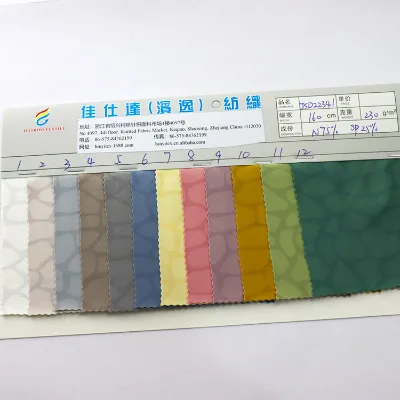
The customization landscape for this material is broad, with suppliers offering options for specific color palettes ranging from standard shades like beige and mint to custom codes. While some listings highlight small MOQs and stock lots for immediate needs, others focus on tailored production for garments, home textiles, and accessories. Buyers should note that the "bubble" effect often correlates with specific weight classes, such as medium-weight options around 230gsm, which influence the drape and suitability for applications like yoga wear, lingerie, or structured bags.
Product Scope and Observed Listing Signals
The product scope for customized color bubble fabric spans diverse applications, including sportswear, swimwear, bedding, and upholstery, driven by the material's unique texture and stretch capabilities. Listings frequently identify the fabric as a spandex blend, often composed of 75% nylon and 25% spandex, which provides the necessary elasticity for form-fitting apparel like leggings and dresses. However, the market also includes 100% polyester or cotton variants that may offer different hand feelings and breathability profiles, requiring buyers to align the fiber type with the specific end-use requirements of their product line.
Observed listing signals indicate a wide range of physical features, from soft hand feelings to high strength and breathability, which are critical for consumer comfort. The "bubble" style is often marketed as a tie-dye or printed aesthetic, available in various widths such as 160cm or 43/44 inches, and can be found in both roll packing and bale packing formats. Buyers must carefully distinguish between stock items available for immediate shipment and custom orders that may require specific yarn counts or model numbers, as the availability of specific colors and patterns can vary significantly between suppliers.
Technical Specifications to Verify
Technical verification begins with confirming the fiber cross-section and composition, as the structural integrity of the bubble effect relies on the specific arrangement of textured yarns. Buyers should demand detailed specifications regarding the yarn count and density, noting that some products are defined by a specific width of 160cm while others may vary. It is essential to validate whether the fabric is knitted or woven, as this determines the stretch recovery and dimensional stability, particularly for applications requiring high strength or specific shrink-resistant properties.
Thickness and weight are critical parameters that define the fabric's suitability for different garment types, with observed listings ranging from light to medium weight options. Procurement teams must verify the exact GSM, such as the 230gsm observed in specific spandex blends, to ensure the fabric meets the desired drape and opacity for the final product. Additionally, the confirmation of the fabric's double-faced nature and its ability to maintain the bubble texture after washing is vital, as this feature directly impacts the longevity and visual appeal of the finished goods.
Compliance and Safety Documentation
Compliance and safety documentation are paramount when sourcing fabrics intended for direct skin contact, such as lingerie, baby wear, and activewear. Buyers should prioritize suppliers who can provide valid OEKO-TEX 100 certification, which verifies that the textile is free from harmful substances and safe for human use. This certification is particularly relevant for products marketed as breathable and comfortable, ensuring that the dyes and chemical treatments used to achieve the customized colors do not pose health risks to the end consumer.
Beyond chemical safety, documentation must address the specific standards applicable to the fiber composition, whether it is a synthetic blend like nylon-spandex or a natural fiber like cotton. Procurement teams should request test reports that confirm the fabric's shrinkage resistance and colorfastness, as these properties are essential for maintaining the quality of the bubble texture over time. Ensuring that the supplier adheres to international safety standards helps mitigate liability risks and builds trust with retailers and consumers who are increasingly demanding transparency in supply chain safety.
Cost Drivers and Commercial Terms
Cost drivers for customized color bubble fabric are heavily influenced by the complexity of the printing process, the specific fiber blend, and the order volume. The use of textured yarns and double-faced constructions often commands a premium compared to standard single-face fabrics, while custom color matching and small MOQs can further increase the unit price. Buyers should anticipate that specialized finishes, such as shrink-resistant or black-out treatments, will add to the base cost, necessitating a clear understanding of the price range relative to the desired quality and quantity.
Commercial terms regarding payment and logistics must be clearly defined to avoid disputes, with common methods including T/T, L/C, and PayPal. The minimum order quantity (MOQ) is a significant factor, as some suppliers offer flexible terms starting from as low as 5 yards per color, while others may require larger commitments to achieve cost efficiency. Lead times and packing specifications, such as roll packing versus bale packing, also impact the total landed cost, requiring buyers to negotiate terms that balance inventory needs with cash flow constraints.
Supplier Qualification and Quality Control
Supplier qualification should focus on verifying the origin of the goods, with many listings indicating production in regions like Huzhou City or Fujian Province, China. Buyers must assess the supplier's capacity to handle customization requests, ensuring they have the technical expertise to produce consistent bubble textures and color variations across large batches. It is crucial to confirm that the supplier maintains a stable supply of raw materials, such as spandex and nylon, to prevent delays or quality inconsistencies in the final product.
Quality control protocols must be established to verify that the physical features, such as the double-faced structure and stretch properties, meet the agreed specifications. Buyers should implement pre-shipment inspections to check for defects in the printing, ensure the weight and thickness are within tolerance, and confirm that the fabric meets the required safety certifications. Establishing a clear communication channel for addressing quality issues and defining acceptance criteria before production begins is essential for maintaining the integrity of the supply chain.
Long-Term Procurement Checks
Long-term procurement checks involve monitoring the consistency of the fabric's performance over multiple production cycles and seasons. Buyers should track the fabric's behavior in real-world applications, paying close attention to how the bubble texture holds up after repeated washing and wear. Regular feedback loops with the supplier regarding any changes in fiber composition or manufacturing processes are necessary to ensure that the product continues to meet the original quality standards and customer expectations.
Sustainability and supply chain resilience are also critical considerations for long-term partnerships. Buyers should evaluate the supplier's ability to adapt to changing market demands, such as shifts in color trends or new regulatory requirements for textile safety. Establishing a strategic relationship with a supplier who demonstrates reliability in meeting delivery schedules and maintaining quality control will provide a competitive advantage and reduce the risks associated with sourcing specialized fabrics like customized color bubble fabric.
FAQs
Can I get customized colors for bubble fabric?
Yes, customization is available for bubble fabric products. Buyers can request specific colorways to match their design requirements. The supplier supports tailored production for various applications including yoga wear and home textiles. This service allows for unique aesthetic outcomes while maintaining the fabric's structural integrity and performance characteristics.
What is the minimum order quantity for this fabric?
The minimum order quantity is typically five yards per color. This low MOQ supports small batch production and sampling needs. It allows buyers to test market response before committing to larger volumes. The flexible ordering structure accommodates both emerging brands and established manufacturers seeking diverse material options for their collections.
What materials are used in the bubble fabric?
The fabric is primarily composed of a blend of nylon and spandex. One specific variant contains seventy-five percent nylon and twenty-five percent spandex. Another option is made from one hundred percent polyester. These material choices ensure stretch, durability, and comfort, making them suitable for activewear, lingerie, and various garment applications requiring elasticity.
Is the fabric suitable for yoga and sportswear?
Yes, the fabric is explicitly designed for yoga clothes and sportswear. Its double-faced bubble structure provides breathability and stretch. The material offers a soft hand feel and comfortable fit. These properties make it ideal for leggings, shirts, and other athletic garments that require flexibility and moisture management during physical activities.
What certifications does the fabric hold?
The fabric holds OEKO-TEX Standard 100 certification. This ensures the material is free from harmful substances and safe for skin contact. The certification applies to the specific spandex and nylon blend variants. Buyers can rely on this standard for compliance with international safety regulations, particularly for intimate apparel and children's clothing applications.
How is the fabric packaged for shipping?
The fabric is packaged in rolls or bales. Roll packing is the standard method for preserving the material's condition. This packaging style facilitates easy handling and storage for manufacturers. The dimensions and weight are optimized for efficient logistics, ensuring the product arrives in pristine condition ready for cutting and sewing processes.